Multi-omic data integration
Genomic, epigenetic and clinical data integrated with Whole Genome Sequencing (WGS) to investigate disease mechanisms and build high-resolution disease profiles.
Architecting systems that leverage AI (ML), computer vision and multi-omic data integration — delivering customized solutions that enhance clinical diagnostics, strengthen patient autonomy and empower decision-making by HCLS institution leaders.
Institutions, hospitals and biotech collaborations







“I believe biotech and healthcare should put people first — using technology not to replace human care, but to deepen it.”
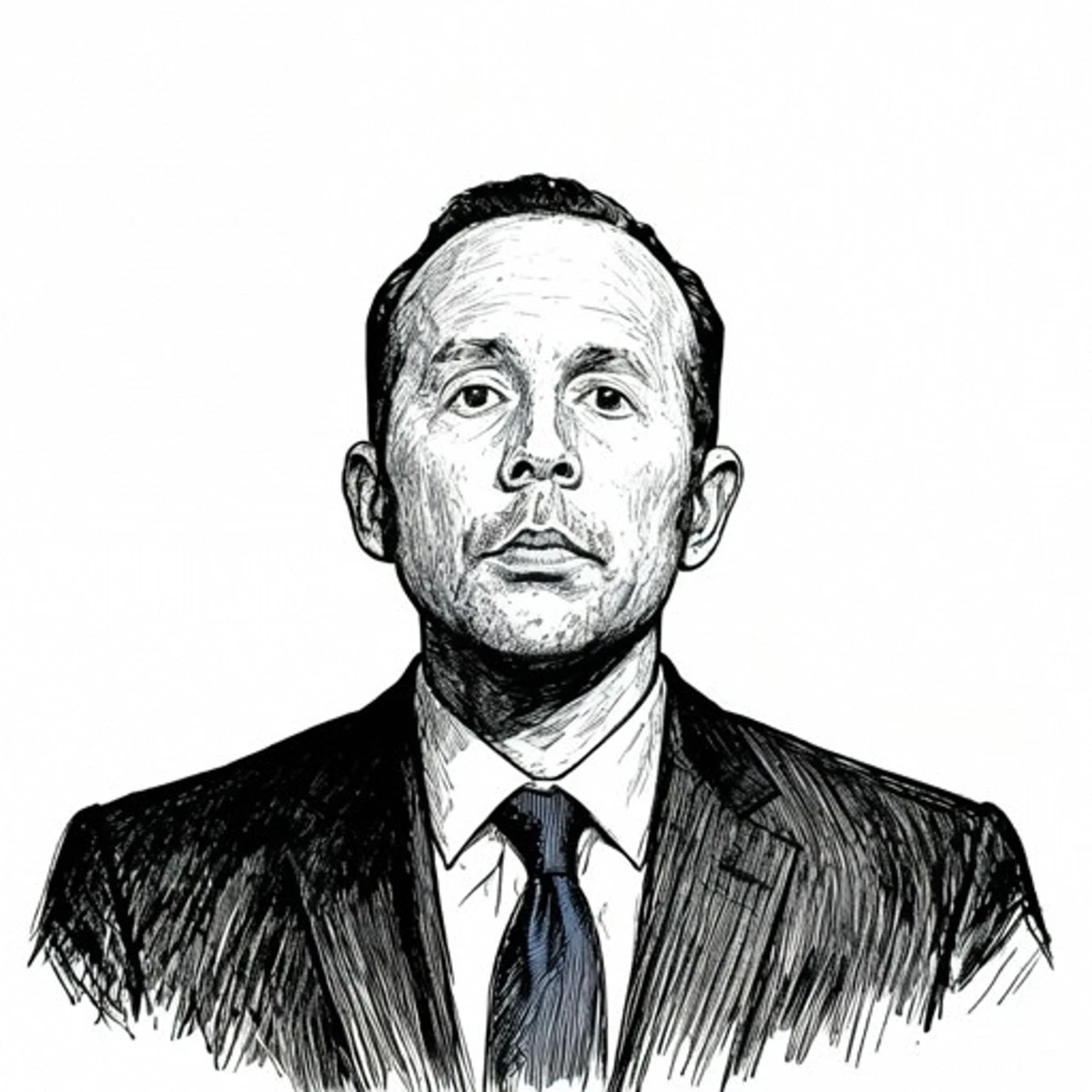
I am CSciO (Chief Scientific Officer) at Origen Genetics. My daily work combines personalized medicine, machine learning, Panomics, computer vision and AI to restore the essence of the doctor–patient relationship while delivering precise, evidence-based and affordable care. Trained in Medicine and Systems Informatics, I began by supporting health and life sciences startups, discovering the transformative power of AI (ML) in real-world healthcare.
Today I translate cutting-edge technologies into practical, explainable tools that physicians and health institutions can apply every day — turning reactive care into measurable prevention, freeing clinical time for what matters, and equipping health-system leaders to modernize care delivery at scale. My approach is pragmatic and data-driven: prevent early, diagnose better, and empower both sides of care.
I work at the intersection of biotechnology, artificial intelligence, data governance and precision medicine, helping governments, hospitals and health organizations transform fragmented biomedical data into integrated, decision-ready systems that improve population health outcomes. I work globally — consulting, speaking and building solutions that bring a vision of truly human-centered healthcare to life.
“The goal is not to replace clinical judgement, but to support it with validated, causally grounded evidence — as already deployed in population-scale health records and genomic platforms.”
Formalised in GAUGE, a causal translation protocol for biomedical ML: estimand definition before modelling, dataset design as a first-class phase, six conjunctive gates with explicit stop rules, and recommendations surfaced only when they are clinician-modifiable, guideline-concordant and supported by an identified effect.
Bioinformatics expertise combined with specialized biomarker measurement partners. Predictive models are continuously validated by a multidisciplinary scientific committee and updated with emerging evidence from non-coding genomic regions and spatial transcriptomics, enabling discovery of tissue-specific biomarker patterns.
Genomic, epigenetic and clinical data integrated with Whole Genome Sequencing (WGS) to investigate disease mechanisms and build high-resolution disease profiles.
Design and clinical validation of machine learning and deep learning models for image-based diagnostics and biomedical signal interpretation.
Scalable architectures for omics data processing, and MLOps pipelines with post-deployment monitoring, external validation and target-trial emulation as evidence changes.
Causal-first governance for clinical AI: every claim carries an evidence label, every variable a causal role and actionability class, with models reviewed by a multidisciplinary scientific committee.
Clinically actionable insight that supports decision-making, including pharmacogenetic treatment optimization.
Training on practical machine learning and computer vision adoption, plus technical strategy discussions with institutional stakeholders.
Scientific & Data Officer
Defining scientific and data strategy at the convergence of genomics, clinical data and applied machine learning — translating complex biomedical problems into deployable technology for the Health & Life Sciences ecosystem.
CSciO, Origen Genetics
Scientific direction of Lifely, Origen's consumer genomics service: a single DNA analysis interpreted across disease predisposition (200+ conditions), epigenetics, nutrigenetics and pharmacogenetics, translated by genetics specialists into a personalised prevention plan with year-long follow-up as new evidence emerges.
Public Electronic Health Record — SERGAS
Orchestrated AI-driven modules embedded across chronic and oncologic care pathways: reconciling multi-source clinical data into a real-time 360° patient view, surfacing guideline-concordant decision support and automating administrative workflows.
MLOps & knowledge infrastructure
A domain-specific scientific crawler continuously updates the genomic knowledge base with peer-reviewed research, keeping models aligned with emerging evidence.
Consulting, training, strategy
Contributions to public sector projects, hospital collaborations and biotech initiatives — helping governments, hospitals and health organizations turn fragmented biomedical data into decision-ready systems.
Supporter & advisor
A lifelong interest in music led to helping nurture Meloom, a company taking music learning to a higher level and supporting health and wellbeing.
Granularity And Uncertainty Gating of Evidence
How I decide what a project can and cannot claim.
Most failures in biomedical data work aren't modelling failures. They happen earlier, when a question is never defined precisely enough for any answer to be valid — and nobody notices until a model is deployed, a trial reads out, or a report reaches a clinician who acts on it.
GAUGE is the protocol I built to catch that: a sequence of decisions made before data is collected, with explicit criteria at each step — what exactly is being estimated, for which intervention, in which population, measured where, and which questions the available data genuinely cannot answer. Each gate returns a verdict. Projects advance only when every condition holds, not when most of them do.
Every project adds to it: definitions negotiated with the clinicians who own the outcome, failure modes found in real registries, constraints that only appear in practice.
Versioned and fed by published evidence, including studies that contradict it — a framework that can't be wrong isn't a framework.
It does what it's good at, at a scale no person can. What it doesn't do is tell you which variable to act on — separating those two questions is most of the work.
The result is a method that is both efficient and transparent: efficient because projects that can't succeed are stopped early rather than late, transparent because every recommendation carries its evidence level and its assumptions, in writing.
“Saying what the data cannot answer is usually the most valuable thing I deliver.”
Selected contributions to interdisciplinary teaching and scientific exchange.
Longer-form writing lives on Medium.
Available for consulting, speaking and institutional collaboration acrossbiotechnology, AI and precision medicine.